he Korea Football Association sent a letter to Shandong Taishan Football Club, bringing a fresh layer of attention to the relationship between South Korean football authorities and one of China’s best-known professional teams. The contents of the correspondence have not been fully disclosed。and neither side has published a detailed account of the exchange. Still, the decision to communicate formally has prompted discussion among supporters, media observers and people familiar with the administrative demands surrounding international football. A letter from a national association to a club is rarely treated as routine when it involves player registration, national-team duties, disciplinary procedures or the release of official information. In this case, the limited public detail has left room for questions, but it has also encouraged both sides to avoid speculation while any relevant process remains underway.The Korea Football Association sent a letter to Shandong Taishan Football Club at a time when clubs across Asia are facing increasingly complicated calendars. Domestic league matches, continental competitions, national-team camps and travel restrictions can overlap with little warning. Shandong Taishan has a strong following in China and regularly attracts attention because of its competitive record。experienced squad and large football operation. South Korea’s national setup, meanwhile, maintains strict procedures when it seeks cooperation from foreign-based clubs. Even a simple request for medical records, player availability or travel coordination can require several rounds of communication. From the outside, such exchanges may appear bureaucratic. Inside a professional club, they can affect training plans, match preparation and the handling of a player’s physical condition.The Korea Football Association sent a letter to Shandong Taishan Football Club rather than relying solely on informal contact, a choice that suggests the matter was considered important enough to be documented. Formal correspondence creates a clear record of dates, requests and responses, which can be valuable if a disagreement later develops. It also gives the club an opportunity to answer through its own administrative channels instead of reacting to reports circulating online. That point matters in a region where football news can move quickly through social media, often before clubs have confirmed the facts. A short statement from either party could therefore have an outsized effect. Supporters may interpret silence as tension。
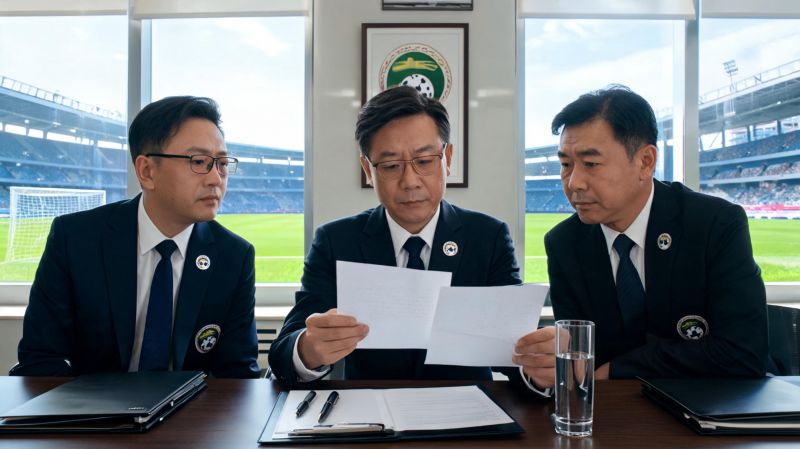
while a routine delay may simply reflect internal checks involving coaches, doctors, legal staff or competition organizers.Shandong Taishan’s response, if released, will likely be watched for its tone as much as for its substance. A cooperative reply could calm speculation and underline the practical nature of the communication. If the club disputes part of the request。
the issue could become more visible, particularly if it touches on a player expected to join a South Korean national-team camp or a competition governed by Asian football regulations. The Korea Football Association and Shandong Taishan Football Club operate within different domestic systems, yet their work often intersects through the movement of players and the requirements of international competition. Clear timelines, accurate medical information and direct communication usually prevent small administrative matters from becoming public disputes. Football’s most expensive mistakes are not always made on the pitch;sometimes they begin with a missed email, an unclear deadline or two offices working from different assumptions.For now, the letter itself appears to be the central confirmed development, while the reason behind it remains a matter for official clarification. The Korea Football Association sent a letter to Shandong Taishan Football Club, but that fact alone does not establish a disciplinary case, a transfer dispute or a conflict between the organizations. Responsible reporting should separate the confirmed exchange from the theories built around it. The episode may fade once both sides provide fuller information, or it may become part of a wider conversation about how Asian clubs and national associations coordinate across borders. Either way。the next public statement will matter. A precise explanation could close the story quickly;continued silence would almost certainly keep attention on a piece of correspondence whose importance has yet to be measured.